

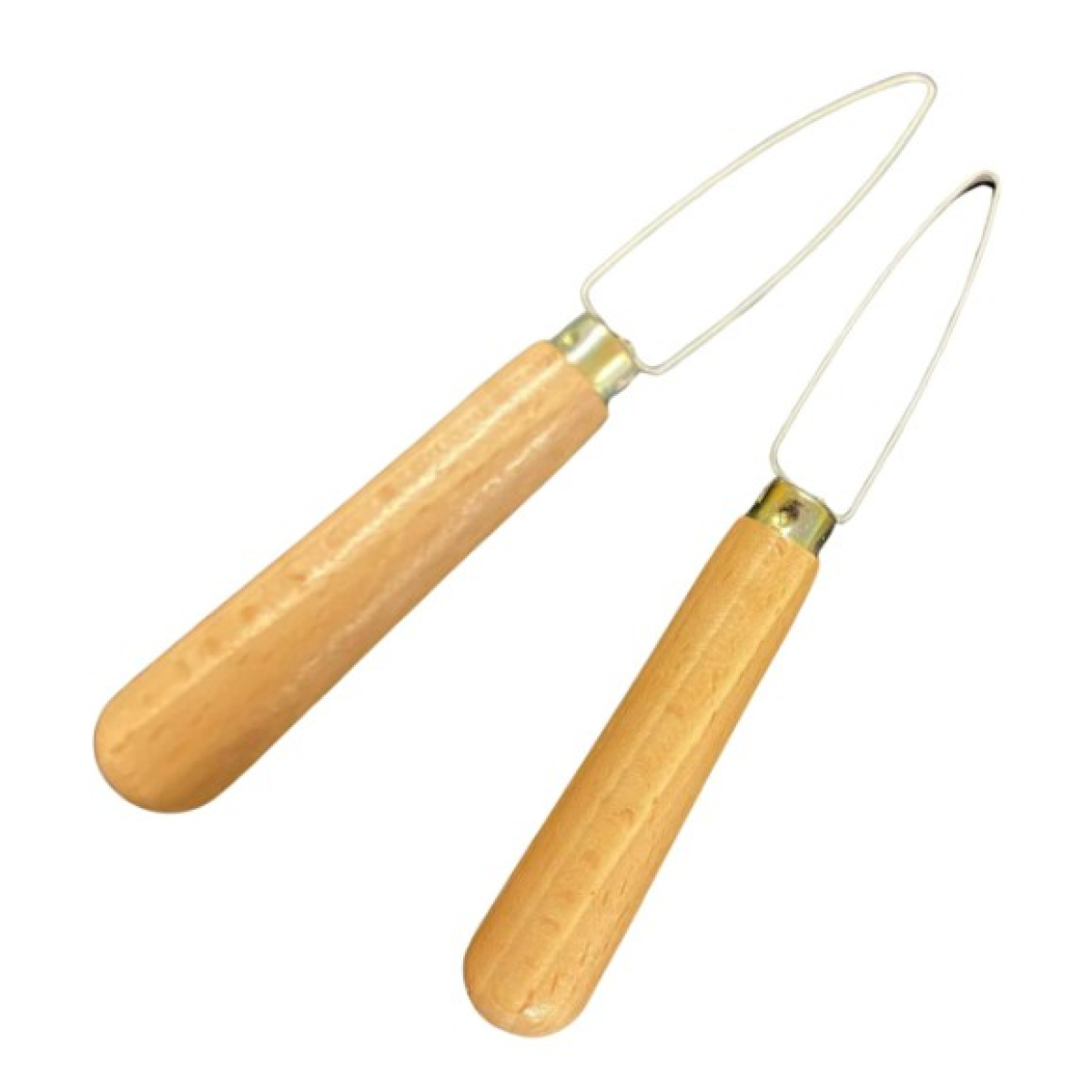
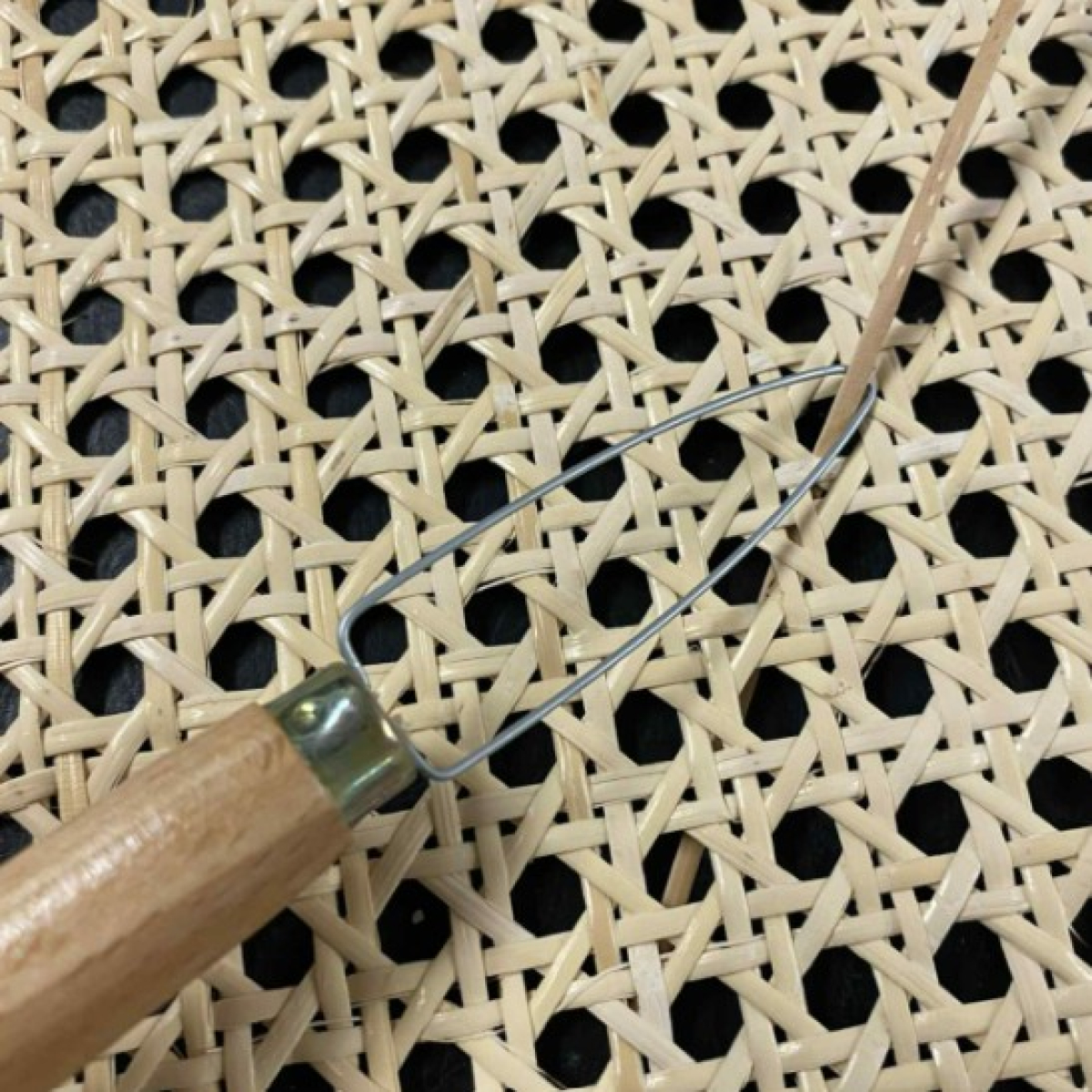
It is a thin, rigid instrument, usually slightly curved at its end, most often made of metal or beech wood. It allows you to:
grasp, pull, and position the cane strands through the holes in the frame;
tension the fibers without damaging them, ensuring they are properly arranged in the weave;
facilitate the movement of the strands from the back to the front of the seat during the weaving process.
| Reference | OUTIRECANNE |
| Weight (arround) | 0.015 KG |
| Shelves | Caning supplies Caning tools |
| Hashtags | #cane 5.4 #strands 3.7 #caning 3.6 #puller 3.6 #tool 3.4 #weave3b0d0afacilitate 3.1 #frame3b0d0atension 2.8 #tools 2.5 #specialized 2.1 #instrument 2 |
The cane puller is an essential tool in traditional caning, used particularly for restoring and making seats from plant fibers. Its simple design belies its precision, perfectly suited to the demands of rattan weaving. General Description The cane puller is a thin, rigid rod, generally between 10 and 20 cm long. It is designed to offer both strength and delicacy, allowing the manipulation of cane strands without breaking or fraying them. Materials This tool is made from strong and durable materials: Metal (steel or brass): for high strength and increased precision; Hardwood, often beech: for a comfortable grip and some flexibility. Shape and Structure Active end: slightly curved or shaped like a small hook, it allows the rattan strands to be easily grasped and guided through the holes in the frame. Shaft: Thin and smooth, it can be straight or very slightly curved to facilitate access to difficult areas. Handle: Sometimes thickened or ergonomic, it ensures a good grip and precise control of movements. Main Functions The cane puller is used at several stages of the caning process: Gripping the strands: It allows you to grasp the rattan fibers and thread them through the holes in the frame; Tensioning: It helps to pull the strands accurately to obtain a regular and strong weave; Adjustment: It is used to reposition the fibers within the weave without damaging them; Guiding: It facilitates the passage of the strands between the different layers of the caning, particularly from the back to the front of the seat. Use and Precision Using the cane puller requires dexterity. The craftsman must apply sufficient tension to ensure the strength of the caning, while avoiding breaking or damaging the fibers. This tool allows for meticulous work, essential for the regularity of the pattern and the durability of the seat. Role in caning Without this tool, threading and tensioning the strands would be much more difficult, even imprecise. The cane puller therefore contributes directly to the quality of the weaving, its aesthetic appeal, and its longevity.
 Cannage.fr