

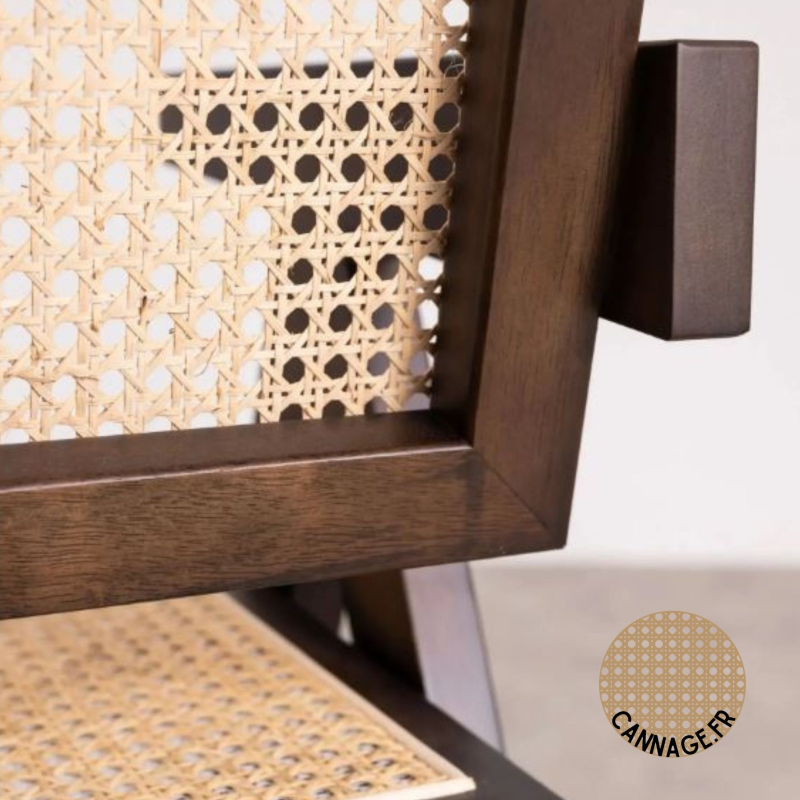
Regularly Dusting Cane
Maintaining cane begins with regular cleaning. The openwork structure of the hexagonal weave encourages the accumulation of dust, pet hair, and small particles that can become embedded in the rattan fibers.
Frequent dusting helps preserve the natural appearance of the cane while preventing dirt from building up over time.
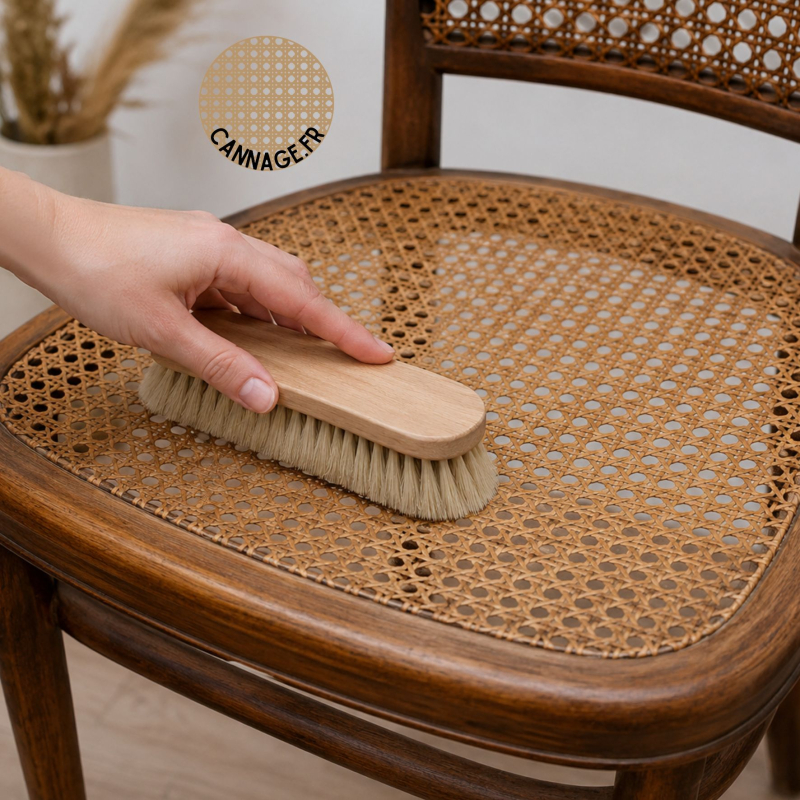
For effective maintenance, use a vacuum cleaner with a soft brush attachment or a slightly damp cloth. Gently wipe the entire surface without applying excessive pressure to avoid damaging the fibers. A small, soft brush can also be used to reach hard-to-access areas.
In daily use, monthly cleaning is generally sufficient. In dusty environments, more frequent cleaning is recommended.
Clean cane retains its natural luster longer and allows for the early detection of any signs of wear or deterioration.
Maintaining the Suppleness of Rattan Fibers
Rattan is a plant-based material that naturally reacts to changes in humidity. Over time, the dry air caused by heating, air conditioning, or prolonged exposure to certain weather conditions can dry out the fibers.
When the caning loses its natural moisture, it gradually becomes stiffer and more fragile. The risk of cracks, breaks, or sagging then increases significantly.
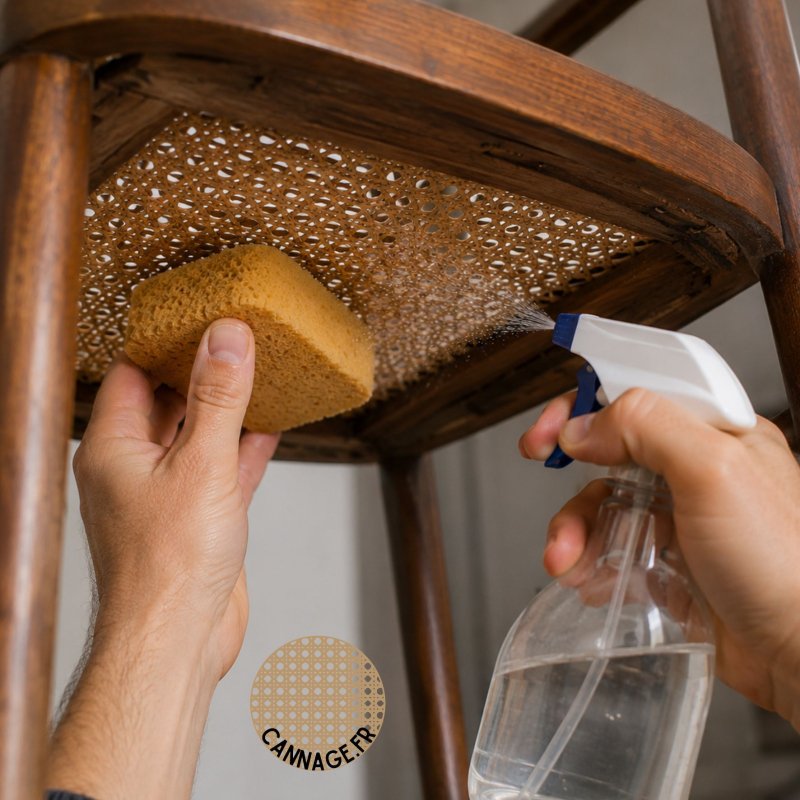
To maintain its suppleness, it is advisable to lightly dampen the underside of the caning once or twice a year. This can be done with a clean, slightly damp sponge. The goal is not to soak the seat but simply to add a little moisture to the fibers.
After dampening, allow the furniture to dry naturally in a well-ventilated room at room temperature. Absolutely avoid using hair dryers, radiators, or other heat sources that could accelerate the drying process.
This simple habit helps to maintain the flexibility of the caning and to considerably extend its lifespan.
Avoiding Factors That Accelerate Wear
Even when of good quality, caning remains susceptible to certain external factors. Prevention therefore plays a crucial role in its preservation.
The main causes of deterioration are:
- prolonged direct sunlight;
- proximity to radiators, stoves, or fireplaces;
- significant temperature variations;
- the use of harsh chemicals;
- excessive humidity or water infiltration.
When cleaning, always use gentle methods. Products containing alcohol, bleach, or solvents should be avoided as they can irreparably damage the natural fibers.
Finally, avoid overloading caned seating or using it improperly. Although robust, caning is designed to distribute weight evenly. Excessive stress can cause premature deformation of the seat.

Repairing or Replacing Damaged
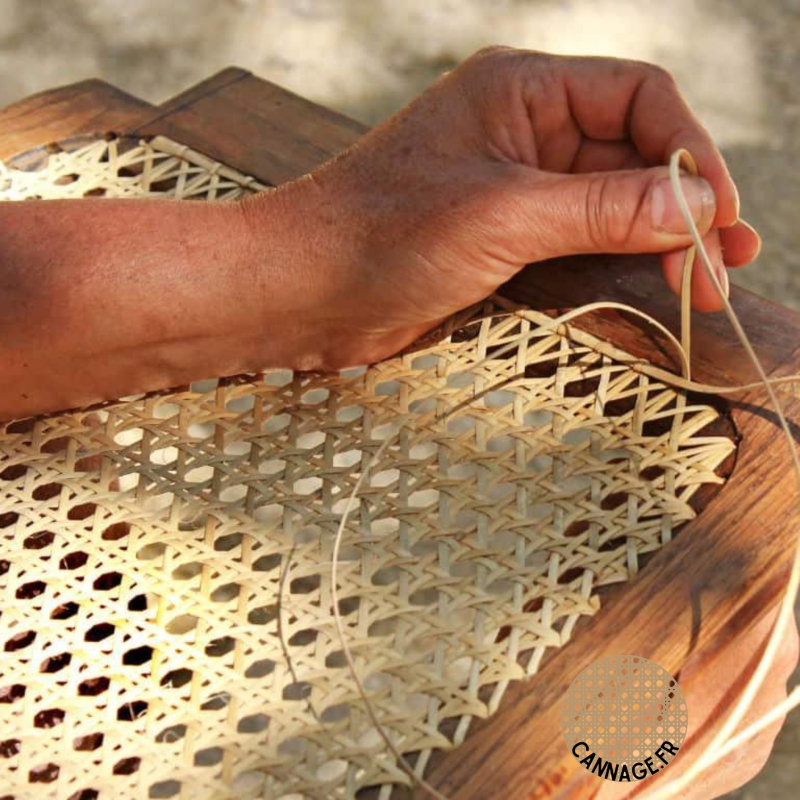
Cane Seating Despite all precautions, natural wear and tear sometimes appears. Certain signs should alert you:
- broken stitches;
- broken fibers;
- visible sagging of the seat;
- significant deformations;
- loss of tension in the caning.
At Cannage.fr, we offer a complete selection of supplies for traditional and modern caning. Whether you wish to maintain an existing chair or completely replace worn caning, you will find the right materials for your project as well as advice for a successful restoration.
Conclusion
Caning is a durable material that can last for decades with proper care. Regular cleaning, light hydration of the fibers, and protection from excessive heat will help maintain its beauty and strength. By adopting these simple steps, you will extend the life of your chairs and armchairs while preserving their authentic character.
I am Christophe, passionate about and manager of the cannage.fr site. In 2026, I decided to create this website with a simple and effective name, cannage.fr, a site specializing in canework, chair restoration, rattan cane, tools and of course advice. As a columnist, creator and enthusiast, my mission is to deliver content that is as fresh as it is relevant, covering areas as diverse as interior decoration, arts and crafts, restoration, handmade and even the environment. I strive to approach each theme with rigor and neutrality.
 Cannage.fr